
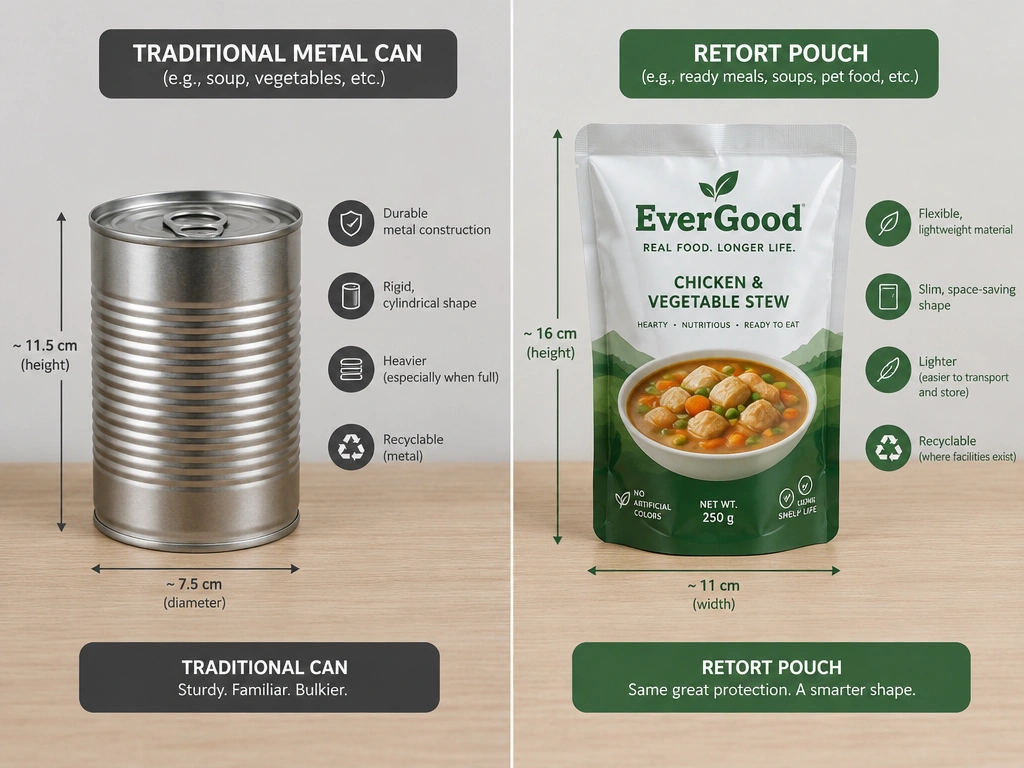
For decades, metal cans were the undisputed king of shelf-stable food preservation. However, a significant shift is occurring in the global food industry. Brand owners and manufacturers are increasingly moving away from rigid metal containers in favor of flexible packaging for ready-to-eat food.
At the center of this revolution are retort pouches. These advanced laminated structures offer the same commercial sterility as cans but with superior efficiency, branding potential, and sustainability. For importers and food brands targeting markets like Europe, North America, and the Middle East, understanding the retort pouch vs can debate is no longer optional—it’s essential for staying competitive.
In this guide, we explore why retort packaging solutions are becoming the preferred choice for ready meals, pet food, and sauces, and how LuckeePak supports this transition with high-quality, compliant manufacturing.
The Efficiency Advantage: Weight, Logistics, and Cost
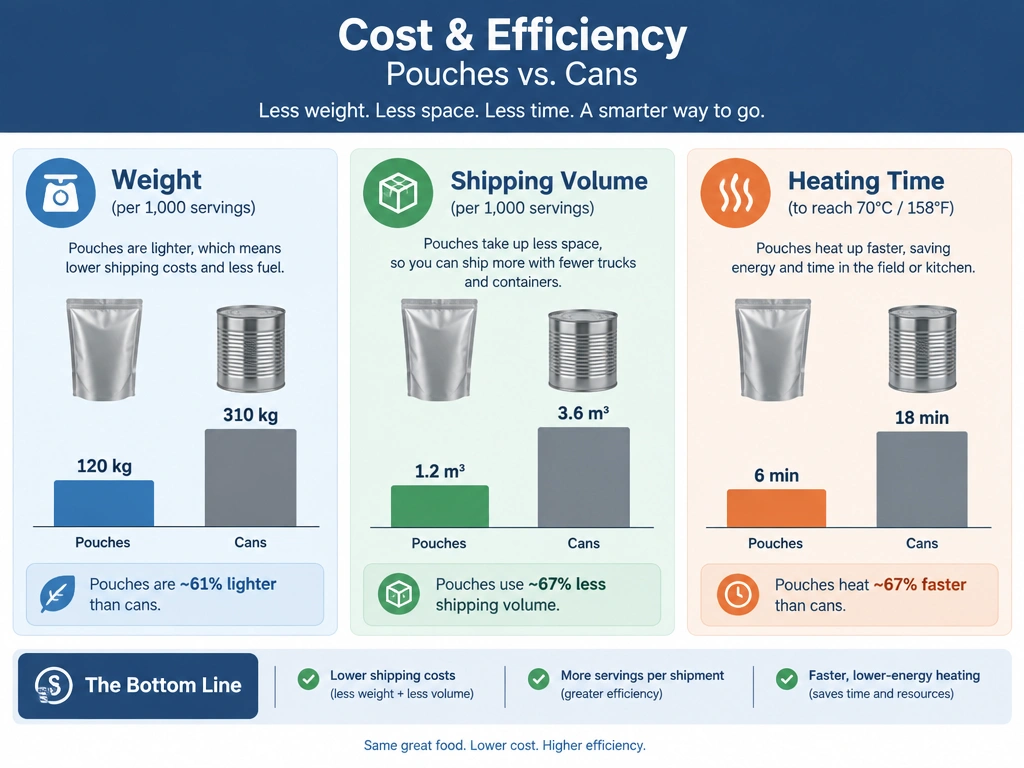
The most immediate benefit of switching to aseptic retort pouches is logistical efficiency. Metal cans are heavy and rigid, meaning you are essentially paying to ship air and metal.
Key advantages of flexible packaging include:
- Weight Reduction: Retort pouches weigh significantly less than cans (often 1/10th the weight), drastically reducing freight costs—crucial for export markets like Brazil and the UAE.
- Space Saving: Unfilled pouches take up a fraction of the warehouse space compared to empty cans.
- Faster Heating: The thin profile of high barrier retort film allows heat to penetrate faster during sterilization, reducing processing time and better preserving the texture and flavor of the food.
For B2B buyers, this translates directly to cost-effective food packaging that improves profit margins without compromising safety.
Shelf Life and Food Safety: Matching the Can’s Performance
A common concern for manufacturers transitioning from metal is safety. Can a pouch really last as long as a can? The answer is yes.
Retort pouches are engineered with multi-layer structures (often including aluminum foil or specialized high-barrier plastics) that block oxygen, light, and moisture completely. When processed correctly in a retort autoclave, they achieve commercial sterility identical to canned goods.
- Shelf Life: Like cans, retort pouches can offer a shelf life of 12 to 24 months at ambient temperatures.
- Safety Standards: At LuckeePak, our food safety retort sterilization compatible films meet rigorous FDA and BRC standards, ensuring your product is safe for global distribution.
- Durability: Modern puncture-resistant layers ensure the pouches withstand the rigors of international shipping.
Sustainability: Meeting Global Regulations (PPWR & Beyond)
Sustainability is the biggest driver for the shift away from metal. Consumers and regulators alike are demanding sustainable packaging.
Traditional metal cans are recyclable but energy-intensive to produce. Recyclable retort pouches, particularly mono-material structures (like Mono-PP retort pouches), are emerging as the eco-friendly alternative.
- Less Waste: Flexible packaging generates significantly less plastic waste by weight compared to rigid alternatives.
- Regulatory Compliance: For exporters to the UK and France, switching to PPWR compliant retort pouches helps meet strict EU recycling targets.
- Consumer Preference: “Eco-friendly” claims on ready meal pouches resonate strongly with modern shoppers in Canada and Europe.
Branding Freedom: Standing Out on the Shelf
Metal cans offer limited printing space and a cylindrical shape that can be hard to stack or display uniquely. Flexible packaging opens up a canvas for creativity.
With custom packaging options like stand-up pouches, flat-bottom bags, and spouted pouches, brands can utilize vibrant digital printing and high-quality rotogravure to tell their story.
- Visual Impact: Full-surface printing allows for photorealistic images of the food inside.
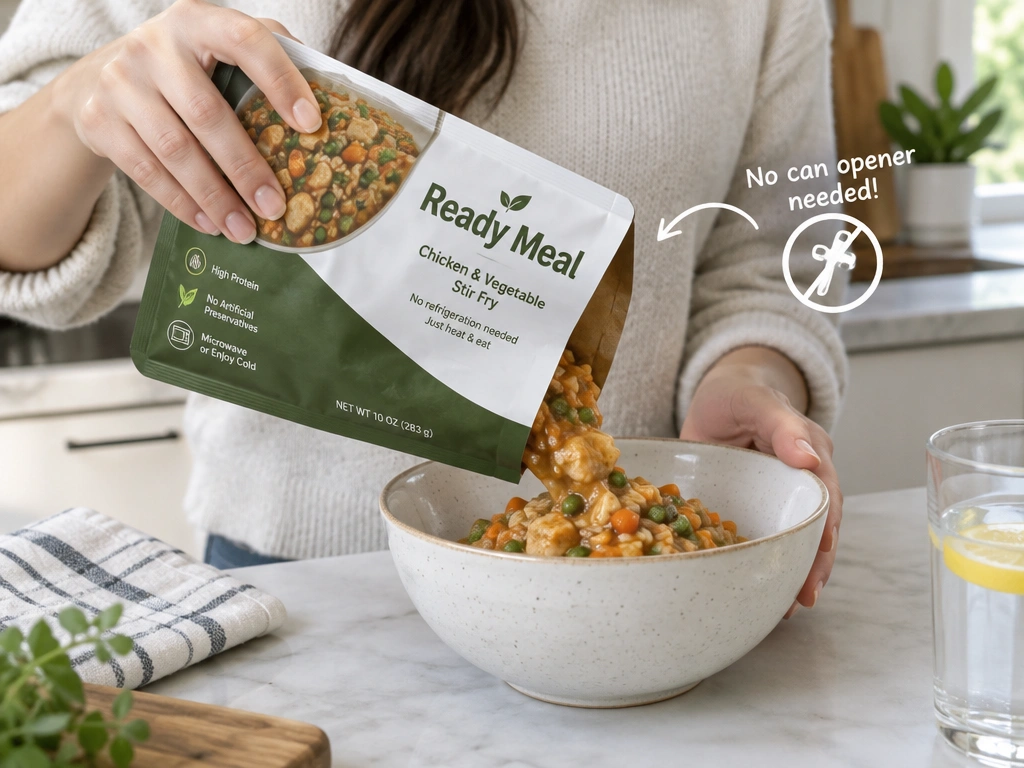
- Convenience Features: Easy-tear notches, resealable zippers, and spouts make soup and sauce retort bags much more user-friendly than cans that require openers.
- Premium Feel: Matte finishes and soft-touch laminates can elevate a standard ready-to-eat meal into a premium dining experience.
Applications: Beyond Just Human Food
While ready-to-eat food packaging is the primary use case, retort pouches are versatile across industries.
- Pet Food: Pet food retort pouches are booming. They keep wet food fresh after opening (unlike cans) and are easier for pet owners to store.
- Specialty Diets: Perfect for gluten-free, organic, or Halal compliant food packaging markets in the Middle East, where premium presentation matters.
- Industrial & Institutional: Large-format pouches reduce waste in commercial kitchens compared to #10 cans.
Why Partner with LuckeePak for Retort Solutions?
Transitioning to flexible retort packaging requires a manufacturer who understands the technical nuances of sterilization and barrier properties. LuckeePak brings:
- Technical Expertise: We guide you on the right packaging materials structure (e.g., PET/AL/RCPP vs. Mono-PP) based on your specific product acidity and sterilization method.
- Global Compliance: Our films are tested for international standards, ensuring smooth customs clearance for retort pouches Canada supplier needs or European imports.
- Customization: From roll stock film for retort form-fill-seal machines to pre-made pouches, we adapt to your production line.
- Speed: Our agile production lines support both rapid prototyping via digital printing and large-scale mass production.
Conclusion
The retort pouch vs can battle has a clear winner for modern brands: flexibility. Whether it’s reducing carbon footprint, lowering shipping costs, or enhancing shelf appeal, flexible packaging for ready-to-eat food offers undeniable advantages.
As the market shifts toward sustainable retort packaging, partnering with an experienced factory like LuckeePak ensures your transition is smooth, compliant, and profitable. Ready to upgrade your packaging? Contact us today to discuss your retort packaging solutions.
FAQ: Common Questions About Retort Pouches
1. Do retort pouches have the same shelf life as metal cans?
Yes. When manufactured with high-barrier materials (like aluminum foil or EVOH layers) and properly sterilized, retort pouches can achieve a shelf life of 12-24 months, identical to cans.
2. Are retort pouches recyclable?
Traditional multi-layer retort pouches are difficult to recycle. However, LuckeePak offers recyclable retort pouches made from mono-materials (like all-PP structures) that are designed to be compatible with existing recycling streams, meeting PPWR compliant standards.
3. Can I use retort pouches for acidic foods like tomato sauce?
Yes, but the material structure must be adjusted. Acidic products require specific inner layers to prevent corrosion or delamination. Our team can recommend the right high barrier retort film for your specific pH level.
4. How does the cost compare to metal cans?
While the per-unit cost of the film can vary, the total landed cost is often lower for pouches due to significant savings in storage and freight (up to 70% less volume/weight). They are widely considered cost-effective food packaging for export.
5. Do you supply roll stock for automatic filling machines?
Yes, we supply both pre-made pouches and roll stock film for retort applications, compatible with major vertical form-fill-seal (VFFS) and horizontal form-fill-seal (HFFS) machinery.