
Expanding into emerging markets offers massive growth potential for food and beverage brands. However, what works in Europe or North America may not translate to success in Latin America or the Gulf region. When evaluating food packaging preferences Brazil vs Middle East, it becomes clear that these two dynamic markets require distinctly different approaches to custom packaging.
From regulatory compliance to climate-driven material choices and cultural aesthetics, understanding these nuances is critical. As a global flexible packaging manufacturer, LuckeePak helps brands navigate these regional complexities. Here is a breakdown of the key differences shaping the flexible packaging market Brazil and the UAE.
Regulatory Compliance: ANVISA vs. Halal Certification
The most critical barrier to entry in both regions is regulatory compliance. Failing to meet these standards can lead to customs seizures or product recalls.
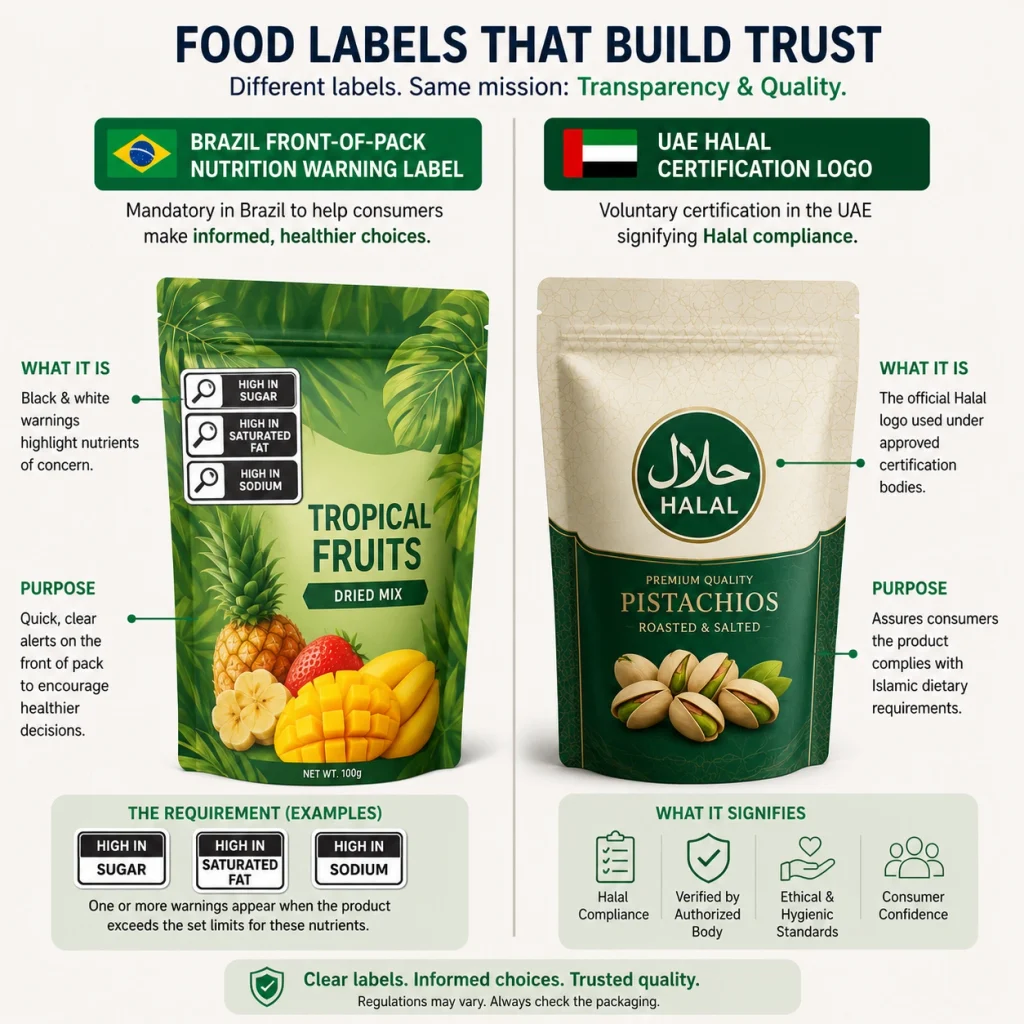
- Brazil (ANVISA Rules): The Brazilian Health Regulatory Agency (ANVISA) has strict packaging compliance ANVISA rules. All food pouch demand must feature mandatory Portuguese labeling. Recently, Brazil also introduced front-of-pack nutrition warning labels (the magnifying glass icon) for products high in sugar, sodium, or saturated fats. Ensuring your beverage bottle label compliance and pouch designs meet these exact specifications is vital to avoid customs seizure Brazil.
- Middle East (Halal Certification): In the UAE and broader GCC region, Halal packaging certification is non-negotiable for meat, dairy, and many processed foods. Beyond the certification itself, there are strict Halal logo placement rules. Packaging must clearly display the Arabic translation of ingredients, and any use of alcohol-derived inks or animal-based adhesives must be strictly avoided to secure an import permit food packaging UAE.
Climate Adaptation: Moisture Barriers vs. Heat Resistance
Geography dictates the functional requirements of packaging materials.
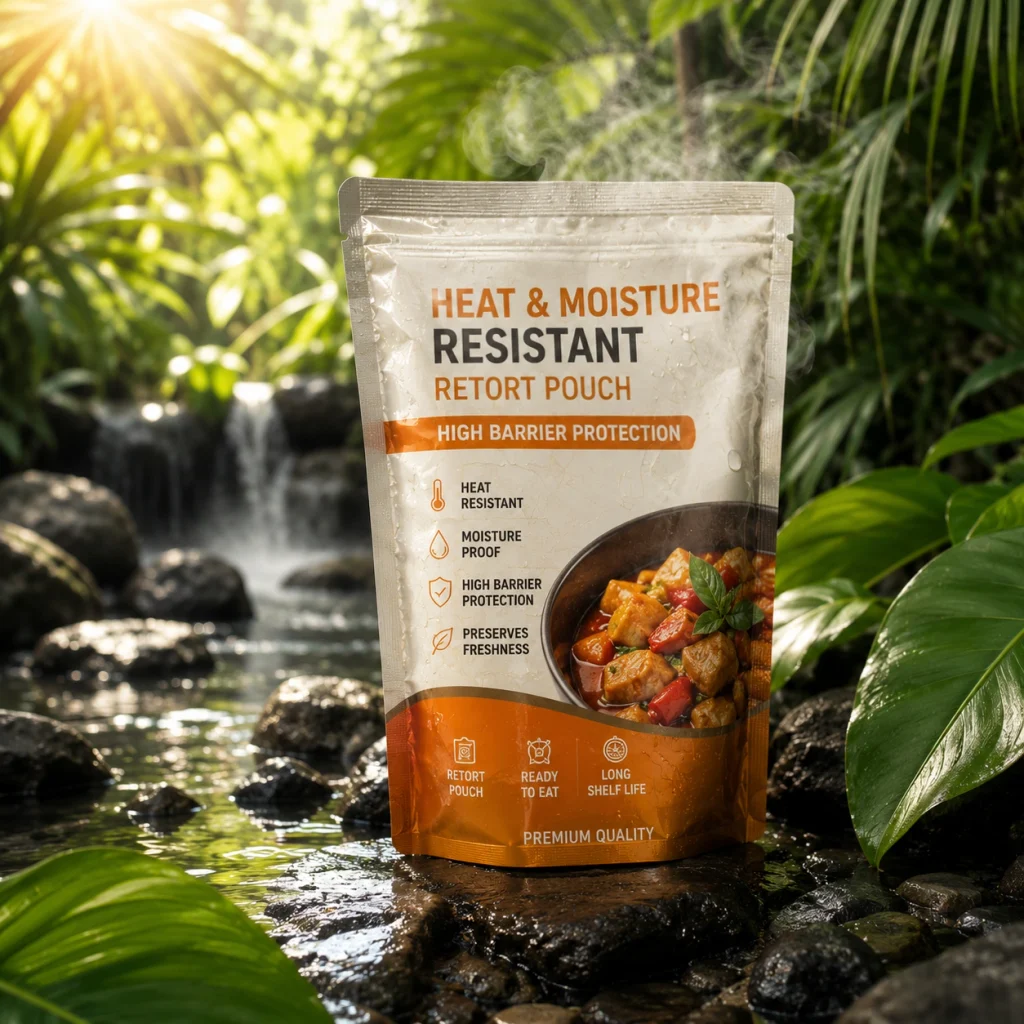
- Tropical Climate in Brazil: Brazil’s high humidity requires robust moisture barrier for tropical climate applications. For dairy packaging Brazil and hygroscopic snacks, high-barrier films are essential to prevent caking and spoilage. Furthermore, Brazil is pushing for sustainability through standards like biodegradable plastic Brazil ABNT NBR 16783, making eco-friendly barrier solutions highly sought after.
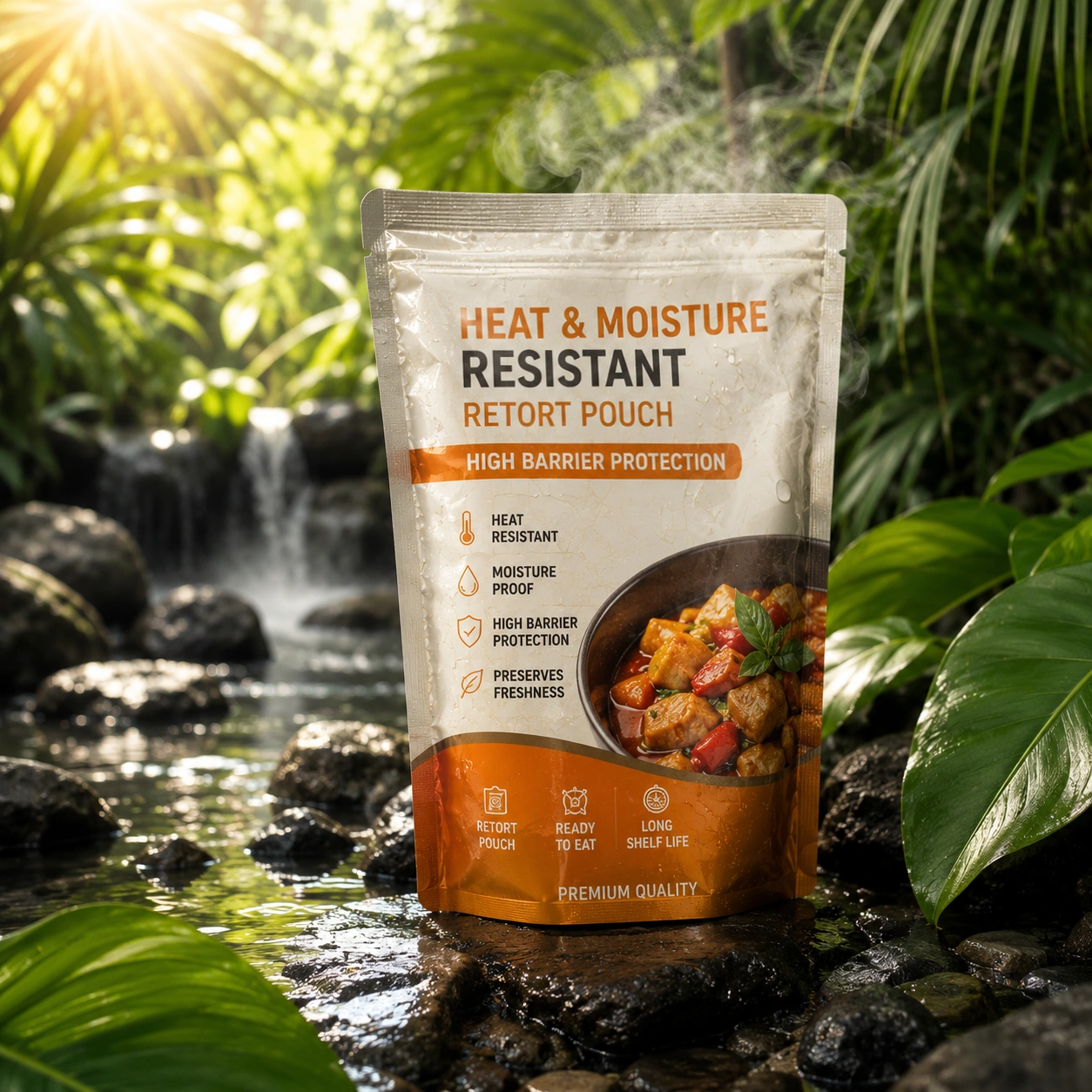
- Extreme Heat in the Middle East: The UAE faces summer temperatures that can exceed 50°C. Standard films can delaminate or fail under these conditions. Brands must invest in heat-resistant packaging Middle East solutions. High-temperature resistant films and specialized sealant layers are mandatory to maintain packaging seal integrity during desert transit and outdoor storage.
Visual Aesthetics: Vibrant Tropical vs. Premium Luxury
Consumer psychology and cultural aesthetics drive regional packaging trends and shelf appeal.
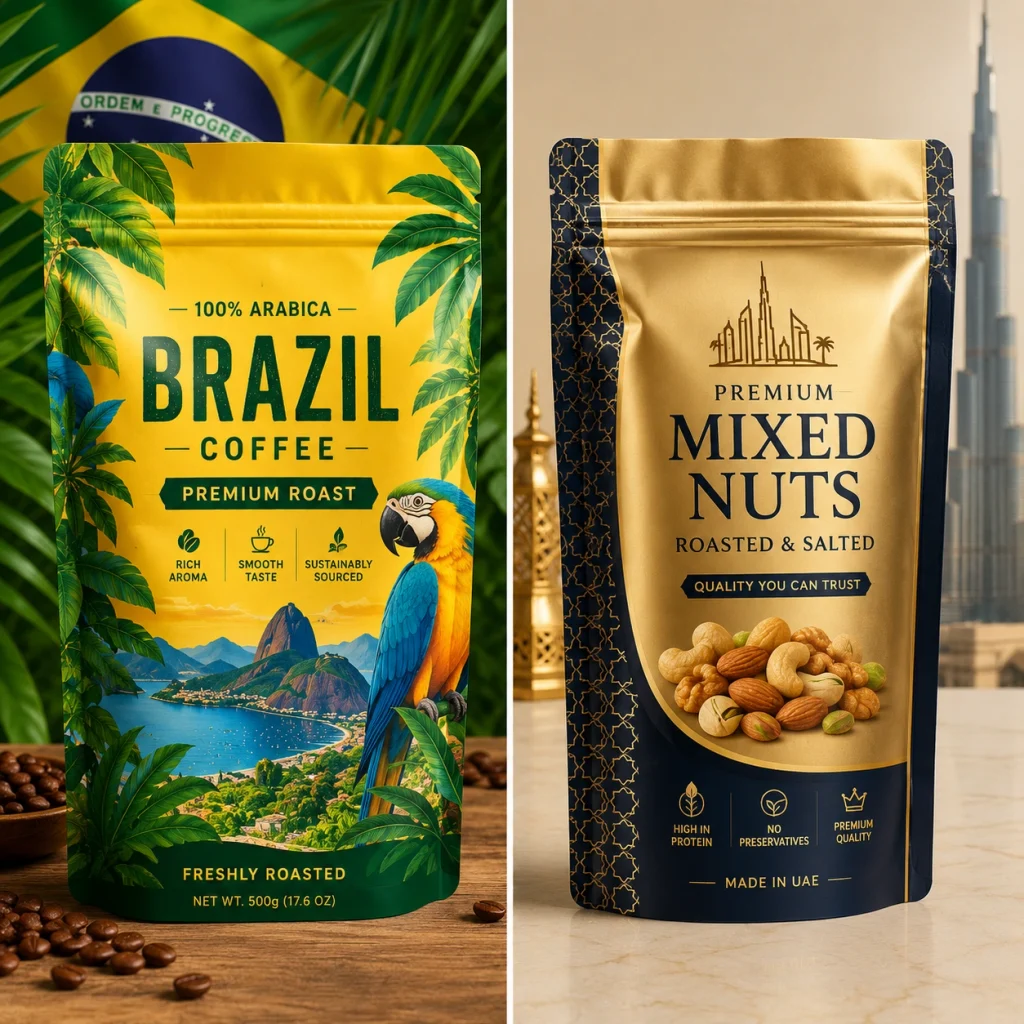
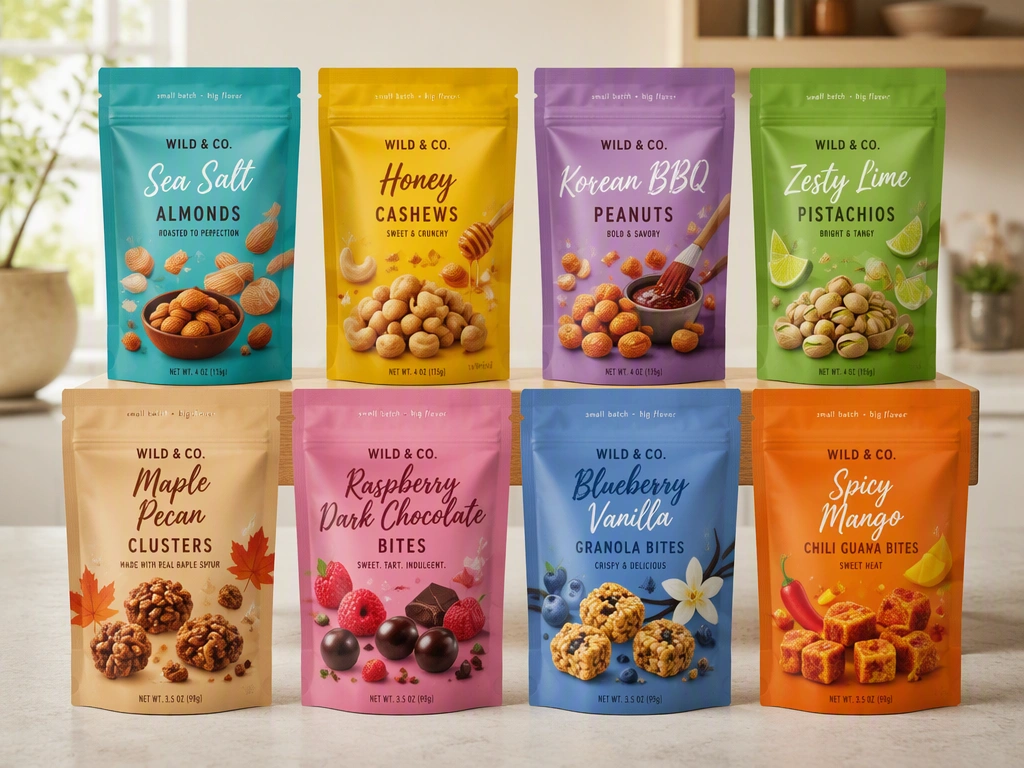
- Brazilian Vibrancy: Brazilian consumers respond strongly to color psychology. For coffee bag packaging Brazil and snack foods, vibrant tropical colors (bright yellows, forest greens, coral oranges) are highly effective. Designs often incorporate lush botanical elements to emphasize natural ingredients and a lively, energetic lifestyle.
- Middle Eastern Luxury: In contrast, the snack pouch Middle East market, particularly in Dubai, leans heavily toward premiumization. Luxury snack packaging Dubai frequently utilizes rich, metallic finishes, intricate geometric patterns, and tactile elements like embossing. Because gifting is a massive part of Middle Eastern culture, the packaging must feel substantial and expensive.
Sustainability and EPR: Policy-Driven Shifts
Both markets are evolving rapidly regarding environmental responsibility, but through different mechanisms.
- Brazil’s EPR and Recycling: Brazil is implementing Extended Producer Responsibility (EPR) frameworks. Brands must understand EPR registration Brazil packaging and fee calculations. There is also a massive push toward recyclable packaging and post-consumer recycled (PCR) resins to meet national circular economy policies.
- UAE’s Single-Use Plastic Bans: The UAE has implemented phased bans on single-use plastics. This is driving massive demand for alternative flexible packaging formats, such as paper-based laminates and fully recyclable mono-material pouches for ready-to-eat meal packaging Dubai and takeaway services.
Partnering for Regional Packaging Success
Navigating the food packaging preferences Brazil vs Middle East requires a manufacturer with global expertise and local knowledge. LuckeePak provides compliant, region-specific packaging solutions for both markets. Whether you need ANVISA-compliant labels with nutritional warnings for Brazil, or high-temperature, Halal-certified luxury pouches for the UAE, our FDA and BRC-certified facility ensures your products hit the shelves safely and beautifully.
Frequently Asked Questions (FAQ)
1. What are the mandatory labeling requirements for exporting food pouches to Brazil?
All packaging must be in Portuguese and comply with ANVISA regulations. This includes accurate nutritional tables, ingredient lists, and the new front-of-pack magnifying glass warning labels for high sugar, sodium, or saturated fat content.
2. Does Halal certification apply to the packaging materials themselves?
Yes. To obtain Halal packaging certification in the UAE, the packaging materials, inks, and adhesives must be free from haram (forbidden) substances, such as alcohol-based solvents or animal-derived glues.
3. How do I prevent packaging delamination in the Middle East heat?
You must specify high-temperature resistant packaging films. Using specialized sealant layers and adhesives designed to withstand temperatures above 50°C ensures the pouch maintains its seal integrity during extreme desert transit.
4. Are digital printing options available for regional compliance labels?
Yes. Digital printing is ideal for both markets, allowing you to easily customize Portuguese or Arabic text, update nutritional warnings, and print vibrant or metallic designs without the high setup costs of traditional rotogravure printing.
5. What is the best way to ensure my packaging meets Brazil’s sustainability goals?
Transitioning to recyclable mono-material pouches or films incorporating Post-Consumer Recycled (PCR) resins is the most effective strategy. This aligns with Brazil’s ABNT standards and helps optimize your EPR fee calculations.