
When coffee brands choose new packaging, the first question is often about finish: matte or glossy. Both look professional, but they send different signals on the shelf and online. A glossy bag tends to feel bright, energetic and premium, while a matte bag often looks modern, understated and tactile. For buyers, the better choice depends less on personal taste and more on brand positioning, product type, printing method and shelf environment.
This guide explains how matte and glossy finishes affect perception, print quality and durability. It also covers how to pair them with functional structures such as a one-way degassing valve for coffee, high-barrier films and recyclable packaging options.
How Finish Affects Shelf Presence and Brand Perception
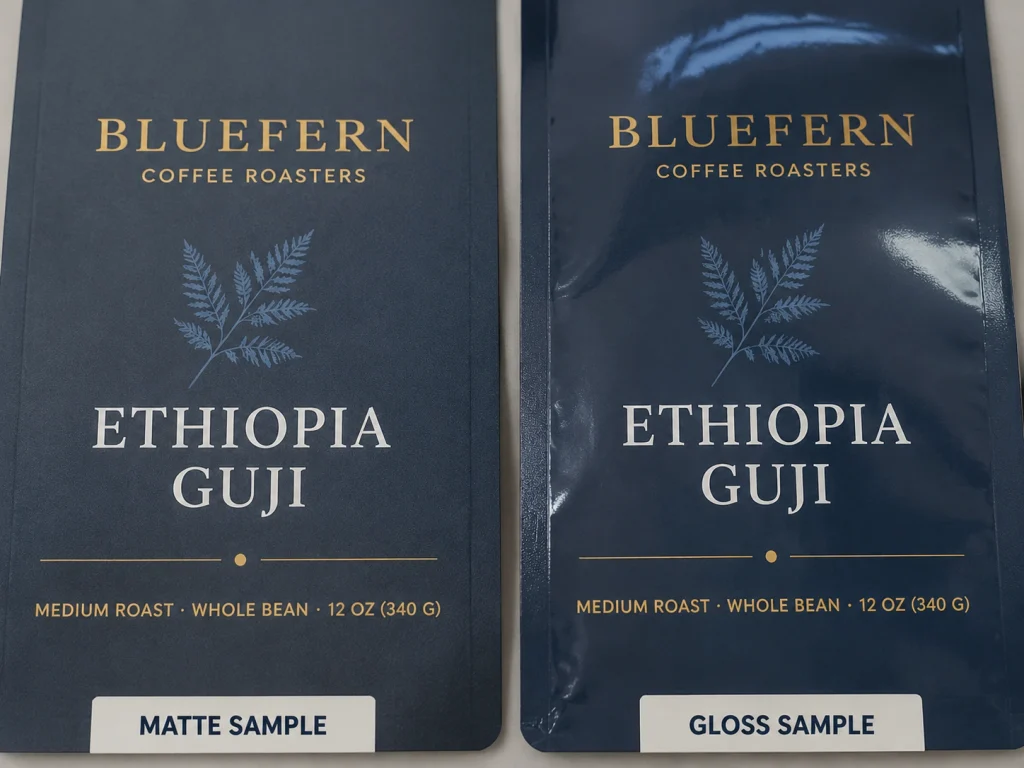
The finish is one of the fastest ways for shoppers to judge quality. A glossy coffee bag reflects light, which makes colors appear more saturated and logos stand out from a distance. This can be helpful in crowded retail environments, convenience stores or e-commerce thumbnails where quick visual impact matters.
A matte coffee bag absorbs light instead of reflecting it. The result is usually a softer, more premium appearance. Matte finishes work well for specialty coffee, single-origin beans and minimalist brands that want to communicate craftsmanship rather than mass appeal. They also feel more tactile, which can improve the unboxing experience for direct-to-consumer sales.
For many brands, the decision is not “matte versus glossy” but “which finish supports the brand story.” A bold, colorful blend may benefit from gloss. A delicate light roast or luxury gift pack may perform better with matte.
Print Quality, Color Accuracy and Digital Printing
Finish has a direct impact on how colors reproduce. Glossy surfaces usually deliver stronger contrast and sharper color density. If your design uses bright gradients, metallic effects or high-impact photography, a glossy or semi-gloss finish often makes those details pop.
Matte finishes reduce glare and can make typography feel cleaner. However, very dark areas may appear slightly softer, and fine details need careful pre-press control. This is especially important for digital printing packaging, where color consistency across batches matters for brand recognition.
If you are unsure, request printed samples in both finishes. Compare them under retail lighting, natural daylight and mobile camera lighting. A design that looks excellent on screen may behave differently once printed on flexible packaging film.
Durability, Handling and Retail Environment
Glossy laminations often show fingerprints, scratches and scuff marks more easily. This can be a concern for bags handled frequently in supermarkets or during warehouse distribution. Matte surfaces tend to hide minor handling marks better, which helps maintain a clean appearance through the supply chain.
However, matte finishes can sometimes feel less resistant to abrasion if the outer layer is not properly specified. For export markets such as Europe, Canada, Brazil and the UAE, packaging should be tested for transport conditions, humidity and shelf handling. A good supplier will recommend the right film structure based on your logistics path, not just the visual effect.
Matching Finish with Valve Performance and Freshness
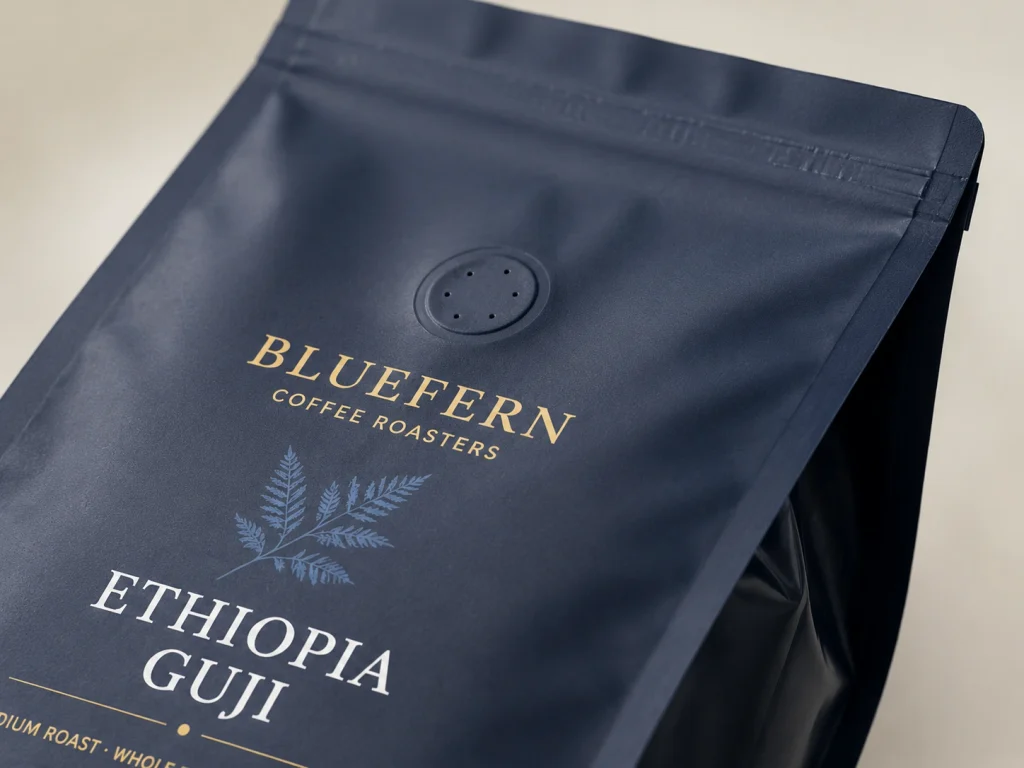
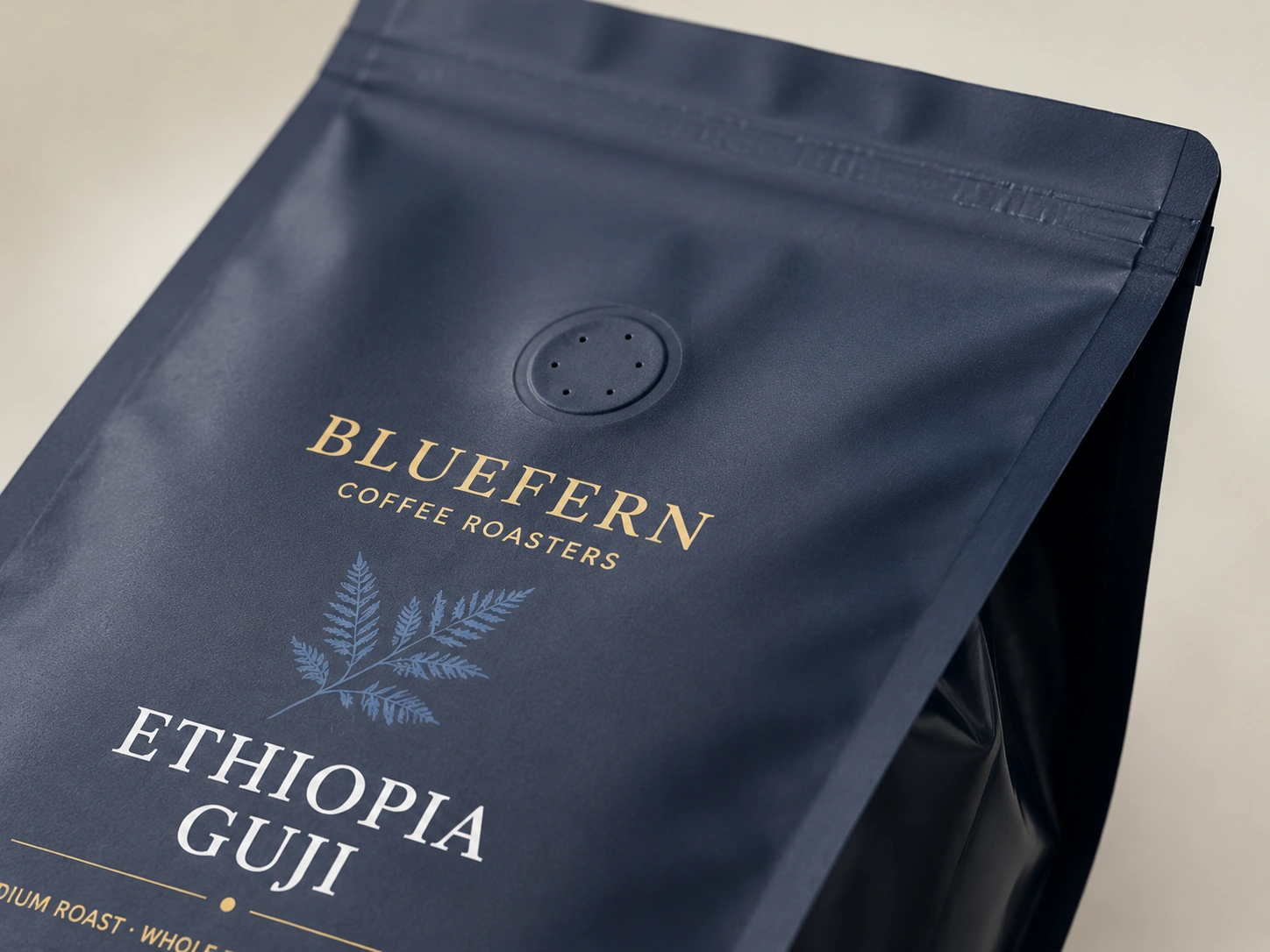
Finish is visual, but freshness is functional. Coffee packaging must balance appearance with barrier performance, especially for whole bean coffee packaging and coffee powder packaging valve applications.
A one-way valve for coffee bags allows carbon dioxide to escape without letting oxygen back in. This helps prevent coffee bag swelling during transit and storage while supporting CO2 release coffee packaging performance. For darker roasts, which release more gas after roasting, a properly selected valve is critical.
When choosing a coffee degassing valve selection guide approach, consider:
- Roast level: Dark roasts need reliable degassing; light roasts may require higher oxygen barrier protection.
- Grind type: Coffee powder generates less post-roast gas but needs strong sealing and fine-particle protection.
- Bag format: A flat bottom coffee bag with valve offers premium shelf presence, while a stand up coffee pouch with valve suits broader retail and e-commerce formats.
- Material structure: An aluminum foil coffee bag with valve provides strong aroma and moisture protection, while a mono-material coffee pouch supports recyclability goals.
A food-grade PE degassing valve should be compatible with your film structure and sealing process. If you are developing recyclable coffee packaging with valve, confirm that the valve material and attachment method align with local recycling requirements.

Which Finish Drives More Sales for Coffee Brands
There is no single winner. Glossy finishes often perform better when the goal is visibility, color impact and mass-market appeal. Matte finishes usually perform better when the goal is premium positioning, tactile experience and specialty differentiation.
For OEM coffee bags with degassing valve, the safest approach is to test both finishes with your actual product. A custom coffee packaging supplier can provide samples in different structures so you can evaluate shelf impact, print quality, valve placement and barrier performance together.
As a coffee packaging manufacturer China partner, LuckeePak supports brands with flat bottom bags, stand up pouches, roll stock film, retort pouches and digital printing packaging. We help buyers choose finishes that match their market, whether they need coffee packaging for Europe, coffee packaging for Canada, coffee packaging for Brazil or coffee packaging for UAE.
The best packaging does not only look attractive. It protects freshness, communicates brand value, survives distribution and makes the buying decision easier for the customer.
Conclusion
Matte and glossy coffee bags each have clear advantages. Glossy finishes deliver strong color impact and shelf visibility. Matte finishes create a modern, premium feel and often hide handling marks better. The right choice depends on your brand identity, printing method, retail channel and freshness requirements.
For coffee brands, the finish should be decided together with barrier structure, valve performance and sustainability goals. A well-specified coffee bag with degassing valve can keep beans fresh, reduce swelling risk and strengthen brand trust. If you are evaluating options, request physical samples in both finishes and test them with your actual coffee product before final production.
FAQ
1. Does matte or glossy packaging keep coffee fresher?
Freshness depends mainly on the film structure, sealing quality and valve performance, not on matte or glossy appearance alone. A high-barrier structure with a properly selected one-way degassing valve for coffee is more important than finish.
2. Which finish is better for digital printing?
Both finishes can work with digital printing. Glossy finishes usually show brighter colors, while matte finishes give a softer, premium look. Always check printed samples under real lighting conditions.
3. Can recyclable coffee bags use degassing valves?
Yes, but compatibility must be checked carefully. A mono-material coffee pouch may require a valve and attachment method that supports recycling targets. Confirm requirements with your supplier and local regulations.
4. Which bag format works best with degassing valves?
Flat bottom coffee bags with valve and stand up coffee pouches with valve are both common choices. Flat bottom bags offer strong shelf presence, while stand up pouches are versatile for retail and e-commerce.
5. How do I choose between aluminum foil and recyclable structures?
Aluminum foil structures usually provide higher barrier performance and are suitable for long shelf life. Recyclable or mono-material structures support sustainability goals but should be tested for aroma protection, moisture resistance and valve compatibility.