

Pet food packaging faces a unique challenge: it must protect heavy, sharp-edged products while surviving long-distance shipping, warehouse stacking, and rough handling. A single puncture or seal failure can lead to product loss, customer complaints, and costly returns.
For pet food brands, distributors, and importers, choosing heavy duty pet food bags is not just about appearance. It is about structural strength, barrier performance, and consistent sealing. This article explains why puncture and leakage happen during transit, and how the right puncture resistant pet food packaging can protect your product from factory to shelf.
Why Pet Food Packaging Fails During Transit

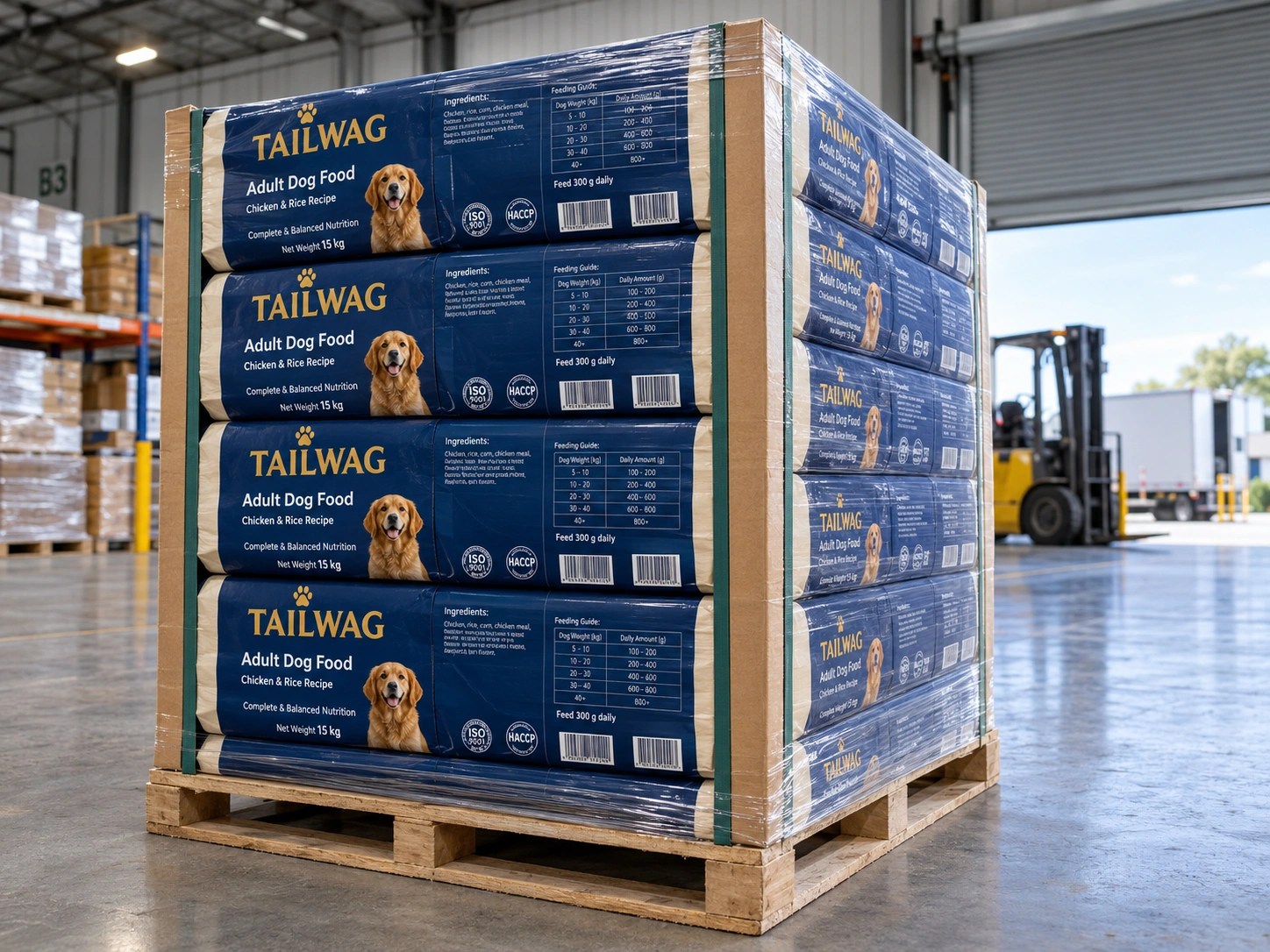
Pet food kibble, treats, and frozen raw food are heavier and more abrasive than many other consumer goods. During export, packaging is exposed to vibration, pressure, temperature changes, and repeated handling.
Common failure points include:
- Sharp kibble edges pressing against the inner layer of the bag
- Weak seal strength failing under heavy product weight
- Poor film structure that cannot resist drops or stacking
- Insufficient moisture and oxygen barriers, causing freshness loss
- Damaged corners during palletization or last-mile delivery
These issues are especially critical for large capacity pet food bags, such as 5 kg, 10 kg, 15 kg, and 20 kg formats. The heavier the bag, the more stress placed on seams, gussets, and seals.
Film Structure: The Foundation of Puncture Resistance
A durable pet food bag starts with the right packaging materials. Not all flexible films perform the same under heavy loads.
For heavy duty stand up pouches and large pet food bags, manufacturers usually choose laminated or co-extruded structures that combine:
- High tensile strength layers to resist stretching and tearing
- Puncture resistant films to protect against sharp kibble
- Moisture barrier for pet food to prevent softening or clumping
- Oxygen barrier pet food bags structures to maintain freshness and aroma
- Reinforced seal layers that maintain integrity under weight and pressure
At LuckeePak, we help customers select film structures based on product weight, filling method, storage conditions, and distribution distance. This is especially important for brands exporting to Brazil, the UAE, Canada, the UK, and France, where transit times can be long and handling conditions vary.

Seal Strength and Bag Design Matter as Much as Film
Even the strongest film can fail if the bag design is not optimized. For leak proof pet food bags, sealing performance should be considered from the beginning of the design process.
Key design factors include:
- Wider seal areas to improve load-bearing capacity
- Reinforced bottom seals for stand-up and flat-bottom bags
- Strong side gussets that expand without weakening the structure
- Proper zipper placement to avoid stress near the seal line
- Consistent heat-seal parameters during production
For heavy kibble packaging, resealable pet food pouches are also important. Consumers expect easy opening, reliable reclosing, and no leakage after first use. A well-designed zipper combined with strong side seals helps prevent air and moisture from entering after the bag is opened.
Testing Before Mass Production
Reliable kibble packaging solutions should be tested before full-scale production. At LuckeePak, we recommend evaluating performance through practical checks such as:
- Drop tests to simulate handling during logistics
- Compression tests to assess stacking strength
- Seal strength tests to confirm seam durability
- Leak tests to detect weak points in seals or zippers
- Barrier performance checks for moisture and oxygen protection
A proper pet food bag drop test can reveal problems that are not visible during normal inspection. For export orders, testing helps reduce the risk of damage during ocean freight, warehouse transfers, and final delivery.
Sustainability Without Compromising Strength
Many pet food brands now want sustainable packaging without losing durability. The good news is that strength and sustainability do not have to conflict.
Depending on market requirements, brands can consider:
- Recyclable pet food packaging UK compatible structures
- PPWR compliant pet food pouches for European markets
- Mono-material laminated pet food film where recycling infrastructure allows
- Reduced material waste through optimized film thickness
- Eco-friendly large pet food bags that still meet heavy-duty performance needs
For buyers searching for durable pet food packaging Canada, sustainable heavy duty pet food bags, or premium pet food packaging supplier Dubai solutions, the key is balancing barrier performance, mechanical strength, and end-of-life requirements.
How LuckeePak Supports Heavy Duty Pet Food Packaging
As a flexible packaging manufacturer, LuckeePak produces strong pet food pouches, heavy duty stand up pouches, and durable dog food packaging for global brands. Our team supports customers from structure selection to finished bag production.
Our capabilities include:
- Custom packaging for different weights, formats, and finishes
- High-performance laminated pet food film for heavy products
- Pet food packaging with degassing valve options where required
- Pet treat packaging and large-format kibble bags
- FDA/BRC-compliant production for food and pet food safety
- Professional export service for France, the UK, Canada, Brazil, and the UAE
Whether you need multi-wall pet food bags, stand-up pouches, flat-bottom bags, or roll stock film for automatic filling, we help ensure your packaging can survive real-world transit conditions.
Conclusion
Preventing puncture and leakage in pet food packaging requires more than thick film. It requires the right combination of material structure, seal strength, bag design, and quality testing. For brands shipping heavy kibble, treats, or frozen pet food, heavy duty pet food bags are essential for protecting product quality and brand reputation.
LuckeePak works with pet food manufacturers and importers to develop leak proof pet food bags that perform during transit and look strong on shelf. If you are evaluating more durable packaging for your next order, contact our team for structure recommendations and sample support.
FAQ
1. What makes a pet food bag “heavy duty”?
A heavy duty bag uses stronger film structures, reinforced seals, and durable construction to carry heavier products such as 5 kg, 10 kg, 15 kg, or 20 kg pet food. It should resist puncture, tearing, and seal failure during handling and shipping.
2. Can heavy duty pet food bags be recyclable?
Some structures can be designed with recyclability in mind. Options such as mono-material films may support recyclable pet food packaging UK or PPWR compliant pet food pouches, depending on local recycling systems and product requirements.
3. How do you prevent leakage in resealable pet food pouches?
Leakage is reduced by using strong seal layers, correct heat-seal settings, proper zipper placement, and sufficient seal width. Testing under real filling and transport conditions is also important.
4. Are heavy duty pouches suitable for export markets?
Yes. Heavy duty bags for pet food export Middle East, South America, Europe, and North America can be engineered with higher puncture resistance, moisture protection, and stronger seals to handle long-distance logistics.
5. What information do you need to recommend a pet food bag structure?
We usually ask for product type, bag size, fill weight, filling method, storage conditions, target market, and whether features such as zippers, valves, or handles are required. This helps us recommend the most suitable puncture resistant pet food packaging.