

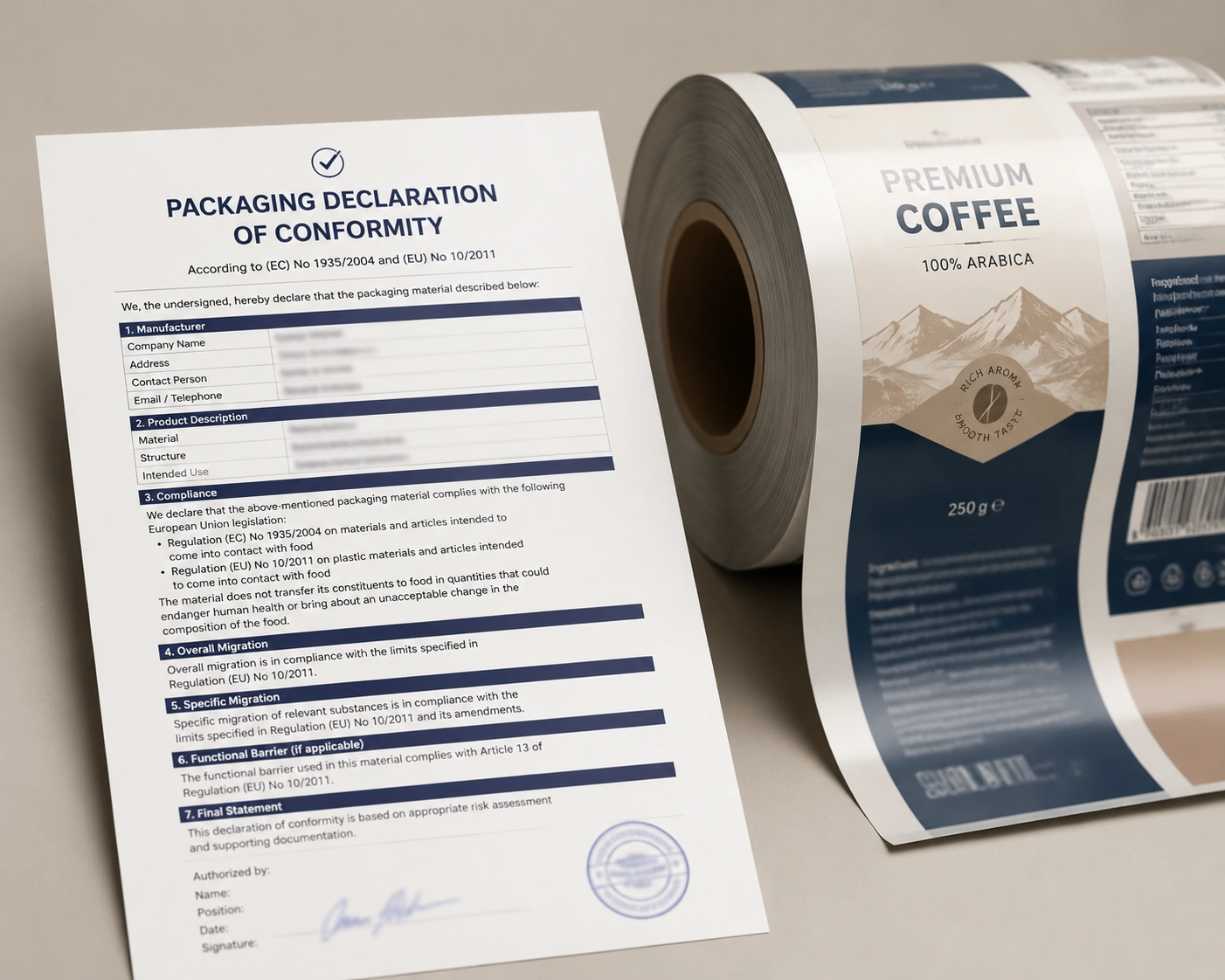
The era of lenient packaging regulations in Europe is officially over. As of August 12, 2026, the EU Packaging and Packaging Waste Regulation (PPWR) is fully enforced, fundamentally reshaping the rules for export packaging to Europe. For food manufacturers, coffee roasters, and snack brands, this is not just an environmental initiative—it is a strict market access requirement.
Failing to meet these new standards can lead to severe packaging clearance risks, including goods being detained at ports, platform listings being suspended, or massive financial penalties. At LuckeePak, we are helping our global clients navigate this transition. Here is what you need to know to secure your supply chain and ensure seamless customs clearance.
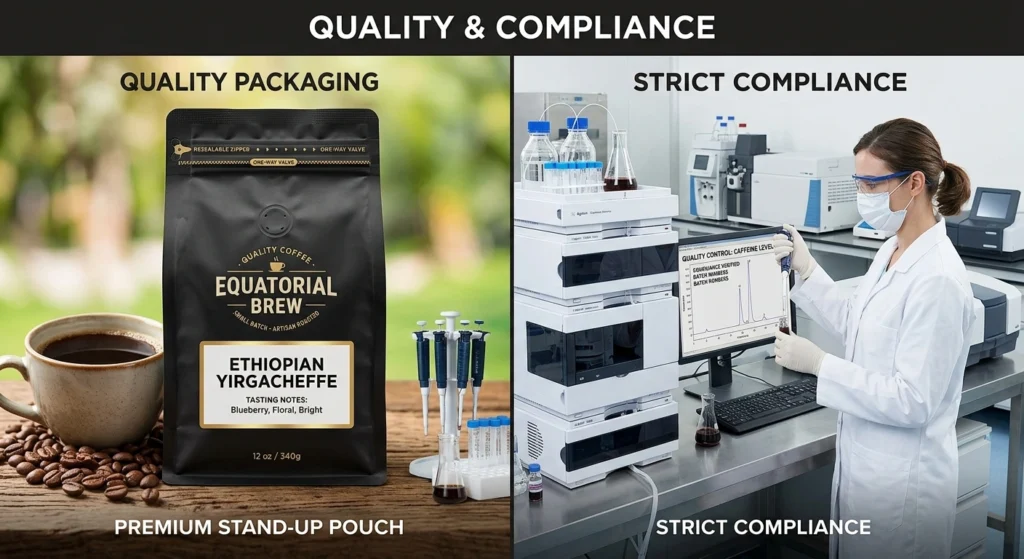
The August 12 Deadline: Zero Tolerance for Non-Compliance
Unlike previous directives, PPWR is a binding regulation with no grace period for existing inventory. Customs authorities across the EU are now actively inspecting incoming shipments for compliance documentation and material safety.
If your food packaging export lacks the required technical documentation or fails substance limits, your goods will be blocked. Proactive compliance is no longer optional; it is the only way to guarantee your products reach the shelves.
Mandatory Heavy Metals Testing for All Packaging
Under PPWR, every component of your flexible packaging—including the pouch, zipper, ink, and adhesives—must comply with strict heavy metal limits.
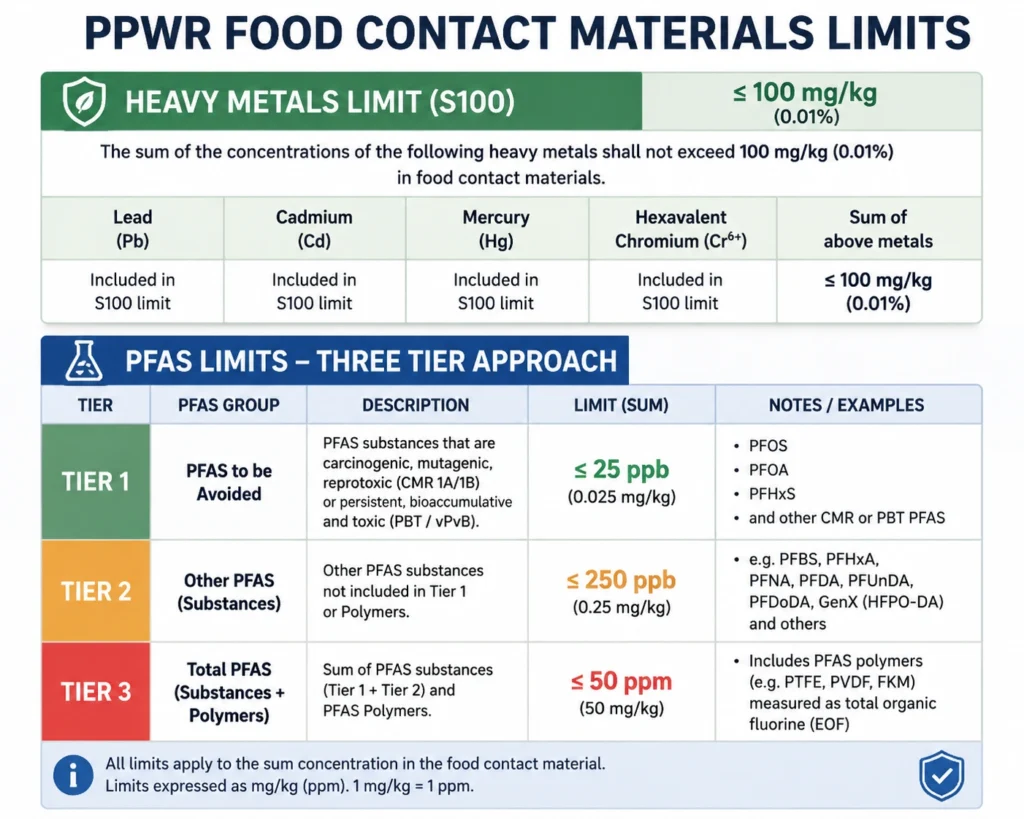
- The Limit: The combined concentration of lead (Pb), cadmium (Cd), mercury (Hg), and hexavalent chromium (Cr6+) must not exceed 100 mg/kg.
- The Risk: Older packaging materials, especially those utilizing certain recycled plastics or vibrant colored inks, are highly susceptible to PFAS exceedance or heavy metal contamination.
- The Solution: Comprehensive heavy metals testing in packaging by certified third-party laboratories is now mandatory to prove compliance before shipment.
PFAS Restrictions: A Critical Hurdle for Food Contact Packaging
The most significant addition to the new EU packaging regulation is the strict control of PFAS (per- and polyfluoroalkyl substances), often referred to as “forever chemicals.”
For food contact packaging compliance, specifically items like coffee bags, snack wrappers, and pet food pouches, PFAS limits are strictly enforced:
- Individual PFAS substances must be below 25 ppb.
- The sum of targeted PFAS must not exceed 250 ppb.
- Total fluorine content (including polymeric PFAS) must be ≤ 50 ppm.
Brands using traditional grease-resistant or moisture-barrier coatings must urgently transition to PFAS-free packaging alternatives or conduct rigorous PFAS testing to avoid catastrophic clearance failures.
The Power of the Declaration of Conformity (DoC)
Testing alone is not enough; you must also possess the correct paperwork. The Packaging Declaration of Conformity (DoC) is the primary document customs and market surveillance authorities will request.
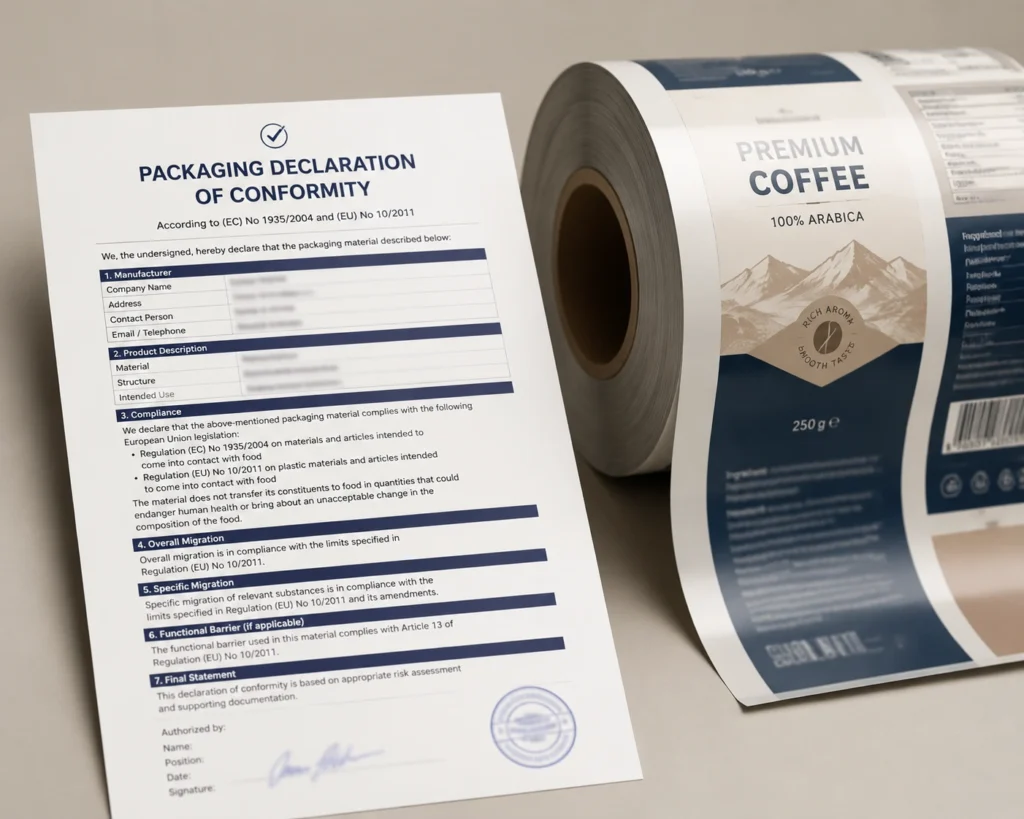
A valid DoC must be issued by the brand owner or importer and backed by complete technical documentation, including:
- Detailed Bill of Materials (BOM) for the entire pouch packaging structure.
- Valid heavy metals and PFAS test reports.
- Recyclability assessments and EPR registration numbers.
Without a DoC, your custom packaging is considered non-compliant, regardless of its physical quality.
Partnering for Comprehensive Packaging Compliance Solutions
Navigating PPWR compliance requires more than just passing a test; it requires a supply chain that understands these regulations from the ground up. As an FDA and BRC-certified eco-friendly packaging supplier, LuckeePak provides end-to-end packaging compliance solutions.
We offer fully tested, PFAS-conscious, and recyclable flexible packaging options, including stand-up pouches and flat bottom bags. By choosing a partner who prioritizes safety and regulatory adherence, you protect your brand’s reputation and ensure uninterrupted market access.
Frequently Asked Questions (FAQ)
1. Does the PPWR regulation apply to cross-border e-commerce packaging?
Yes. PPWR applies to all packaging placed on the EU market, regardless of the sales channel. Whether you are shipping via FBA, direct mail, or traditional wholesale, your cross-border e-commerce packaging must comply with PPWR standards.
2. How can I test my packaging for PFAS if I don’t know the exact chemicals used?
You can utilize a Total Organic Fluorine (TOF) screening test. If the TOF level is below 50 ppm, it generally indicates compliance. If it exceeds this threshold, further targeted PFAS testing is required to identify specific compounds.
3. Is a Packaging DoC required for every single shipment?
The DoC does not need to be submitted to customs for every single shipment, but it must be readily available upon request. Failing to produce it during a random spot check will result in immediate detention of the goods.
4. Do I need to test both the inner and outer layers of my stand-up pouch?
Yes. The 100 mg/kg heavy metals limit applies to each separable component of the packaging. This means the outer printed film, the metallized barrier layer, and the inner food-contact sealant layer must all be tested individually.
5. Can LuckeePak provide PFAS-free packaging for food applications?
Absolutely. We specialize in sustainable packaging and offer advanced barrier films that provide excellent moisture and oxygen resistance without relying on restricted PFAS chemicals, ensuring full food contact packaging compliance.